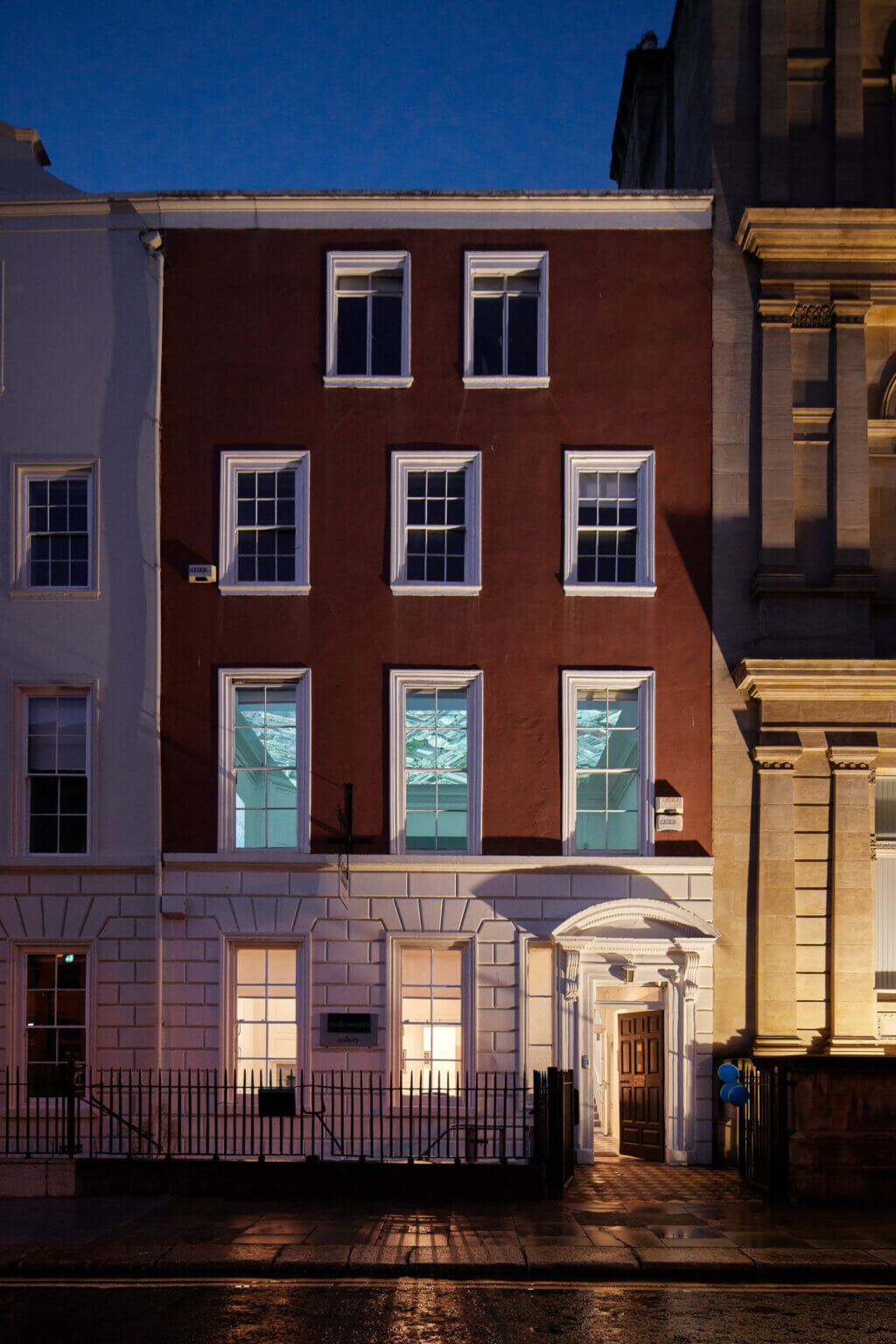
The Molesworth Gallery
13th June 2026 – Group Show
TotemsFROM
13th June 2026—17th July 2026
LOCATION
The Molesworth Gallery, Molesworth Street, Dublin 2, Ireland
When we speak about totems, we cannot help but hear the echoes of a dispute between two of the 20th century’s most influential thinkers, Sigmund Freud and Claude Lévi-Strauss.
In Totem and Taboo, the sage of Vienna sought to explain the origins of religion in so-called ‘primitive societies’, leading to his analysis of the titular object. According to Freud, the totem is a figure that registers simultaneously as ancestor, protector and source of social obligation.
Central to Freud’s account was the observation that “totemic clans” are organised around strict rules of exogamy, outlawing sexual relations and marriage within the group. The totem functions as a symbolic father-surrogate, prohibiting behaviours that express unconscious desires. For Freud, institutions arise from psychic life: the authority of the totem derives from the collective guilt and ambivalence generated by forbidden desire, above all incestuous desire. The cohesion of the group, he writes, is founded upon a “complicity in the common crime”, with the totem preserving this repressed inheritance in symbolic form.
Remonstrating with Freud for getting matters hopelessly backwards, the structural anthropologist Claude Lévi-Strauss argued that social institutions do not arise from unconscious desires. Rather, desires are shaped by pre-existing systems of social organisation.“Men do not act, as members of a group, in accordance with what each feels as an individual; each man feels as a function of the way in which he is permitted or obliged to act.” Social structures provide the conditions for feeling, not vice versa.
This reversal transforms the meaning of the totem. For Lévi-Strauss, its significance lies not in its capacity to embody repressed wishes but in its usefulness as an instrument of classification. Totemic figures are drawn overwhelmingly from the animal kingdom because this furnishes us with an already-existing network of differences and correspondences that can be appropriated to describe social relations. The animal kingdom becomes a vast conceptual reservoir, a readymade concept dispensary, from which groups can borrow distinctions in order to organise themselves symbolically. From this insight emerges Lévi-Strauss’s famous idea of bricolage: the construction of cultural meaning from whatever symbolic materials happen to be available.
Repositories of unconscious and repressed desires or stolen tools for symbolic classification? Which route do you prefer?
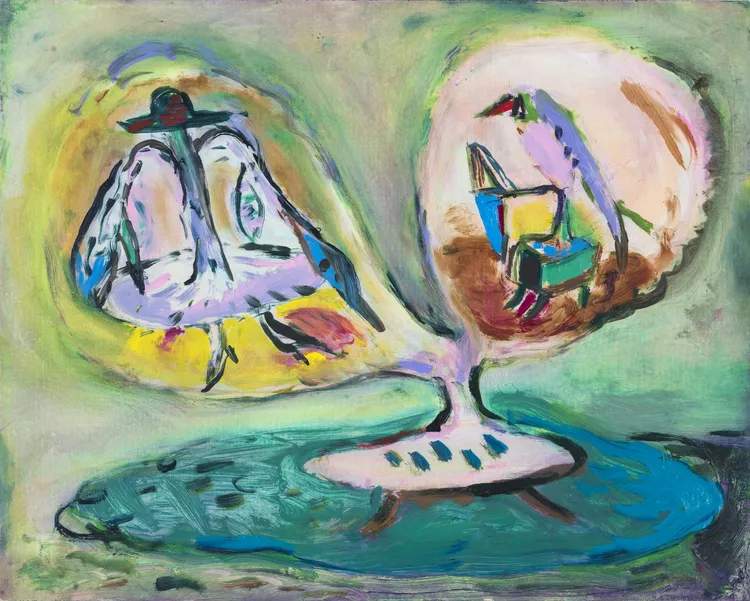
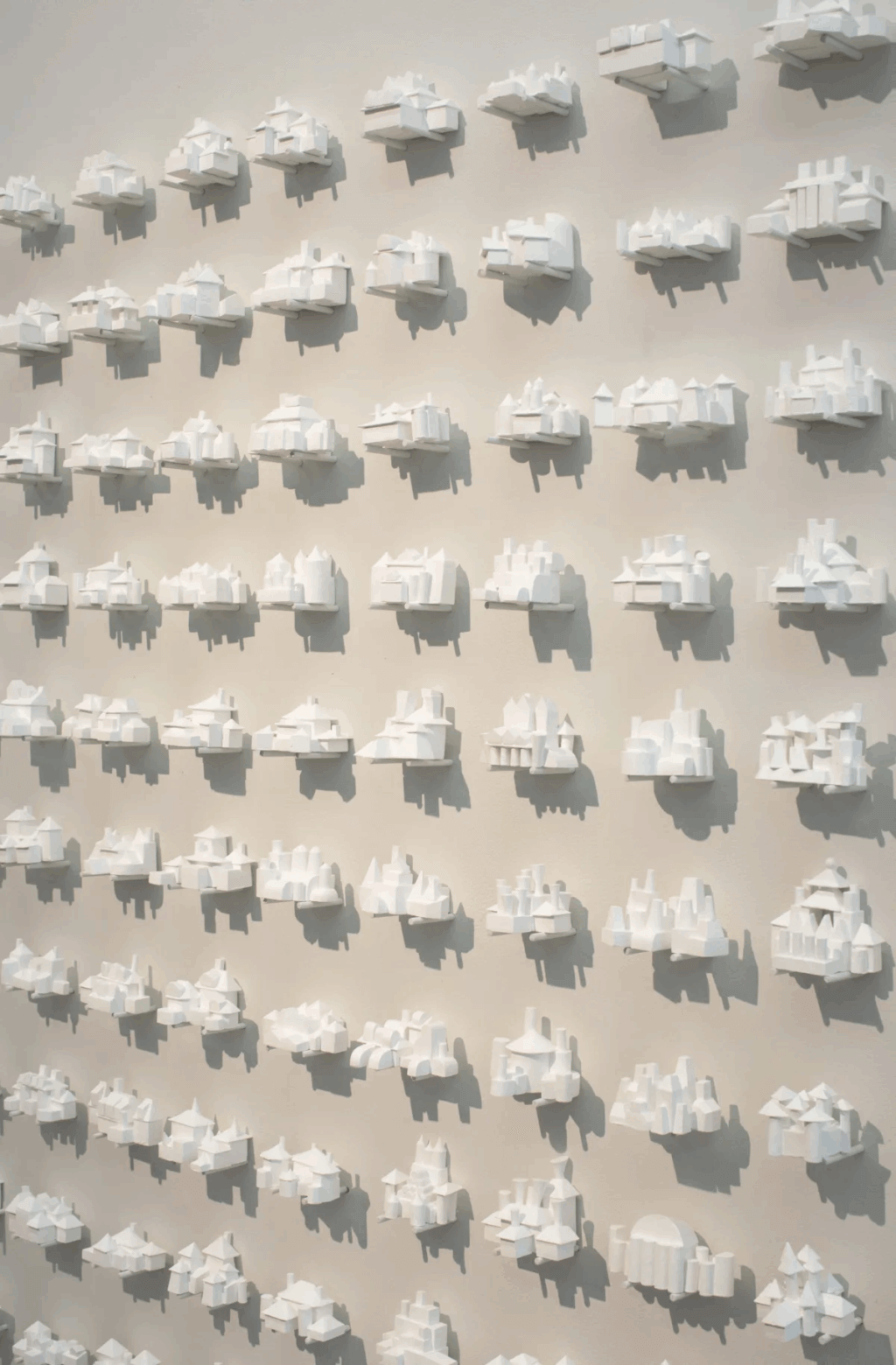
The artists assembled in Totems approach the human figure through this divide. Bodies and anthropomorphic forms recur throughout the exhibition, suffused with meanings that seem to either bubble up from below or descend from above. From below, through the obscure depths of desire and psychic life; and from above, through the symbolic systems that precede and exceed us, whether social, historical, biological, physical or mythic. These figures swarm with libidinal and semantic content. The result is a body of work in which the human figure becomes something larger and stranger than the merely personal: a totemic object suspended between desire and classification.
My instinct, appraising this exhibition, is that the works sort themselves into three groups: ‘Erasure’, ‘Archetype’, and ‘Void’.
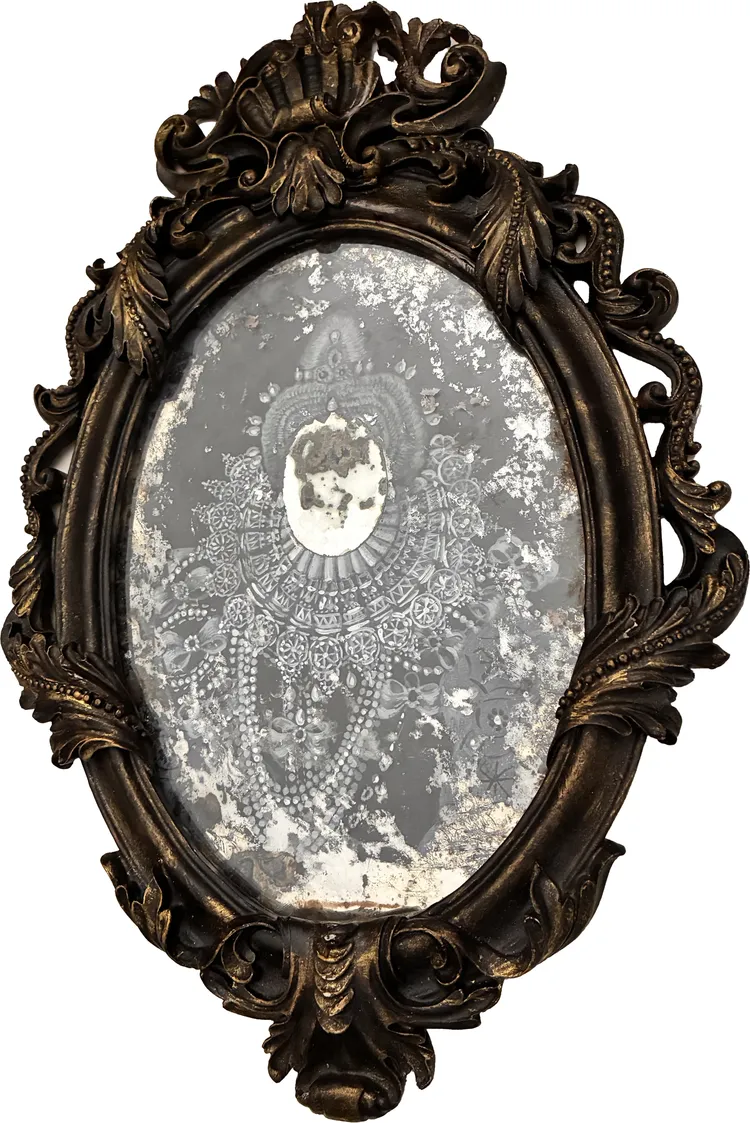
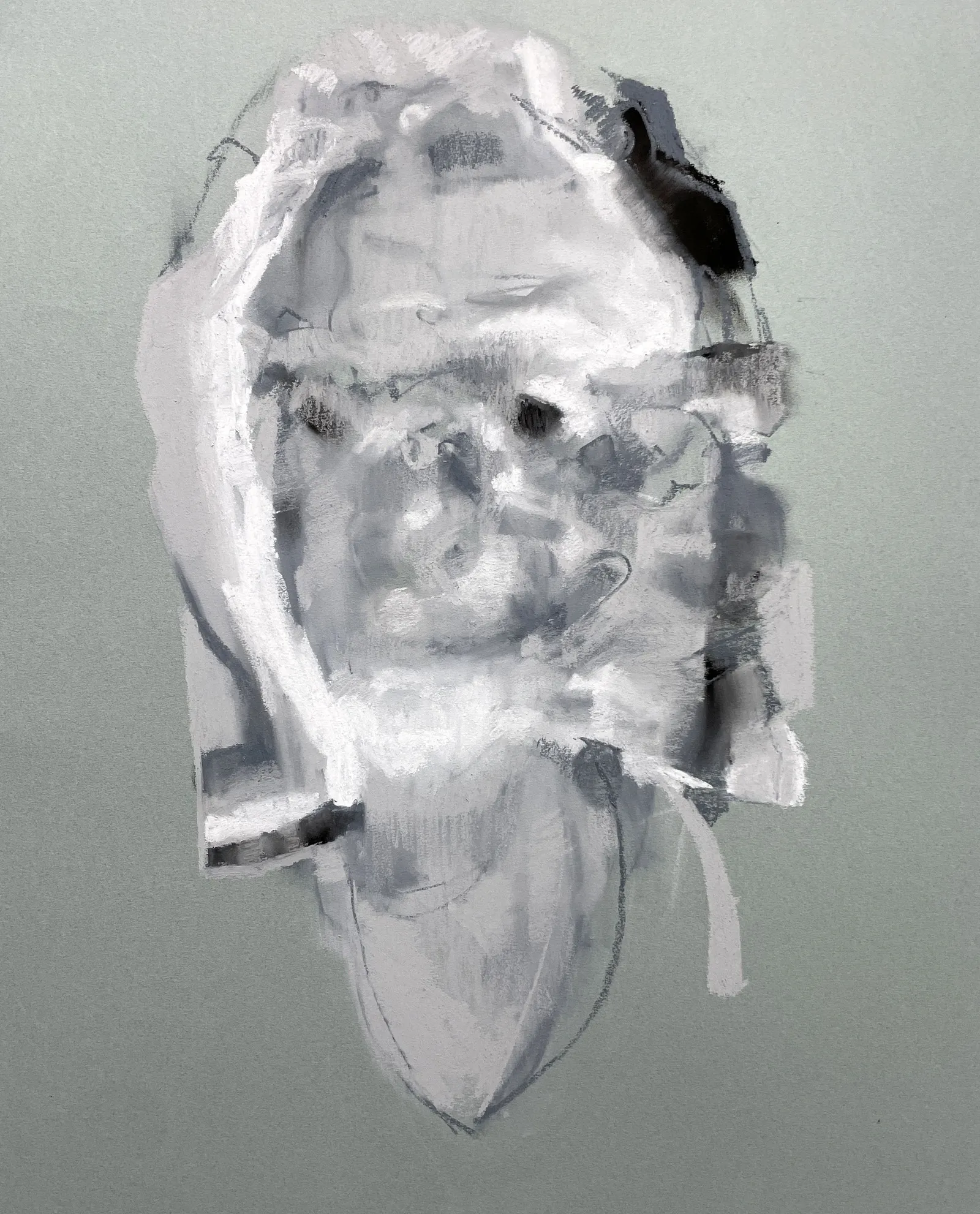
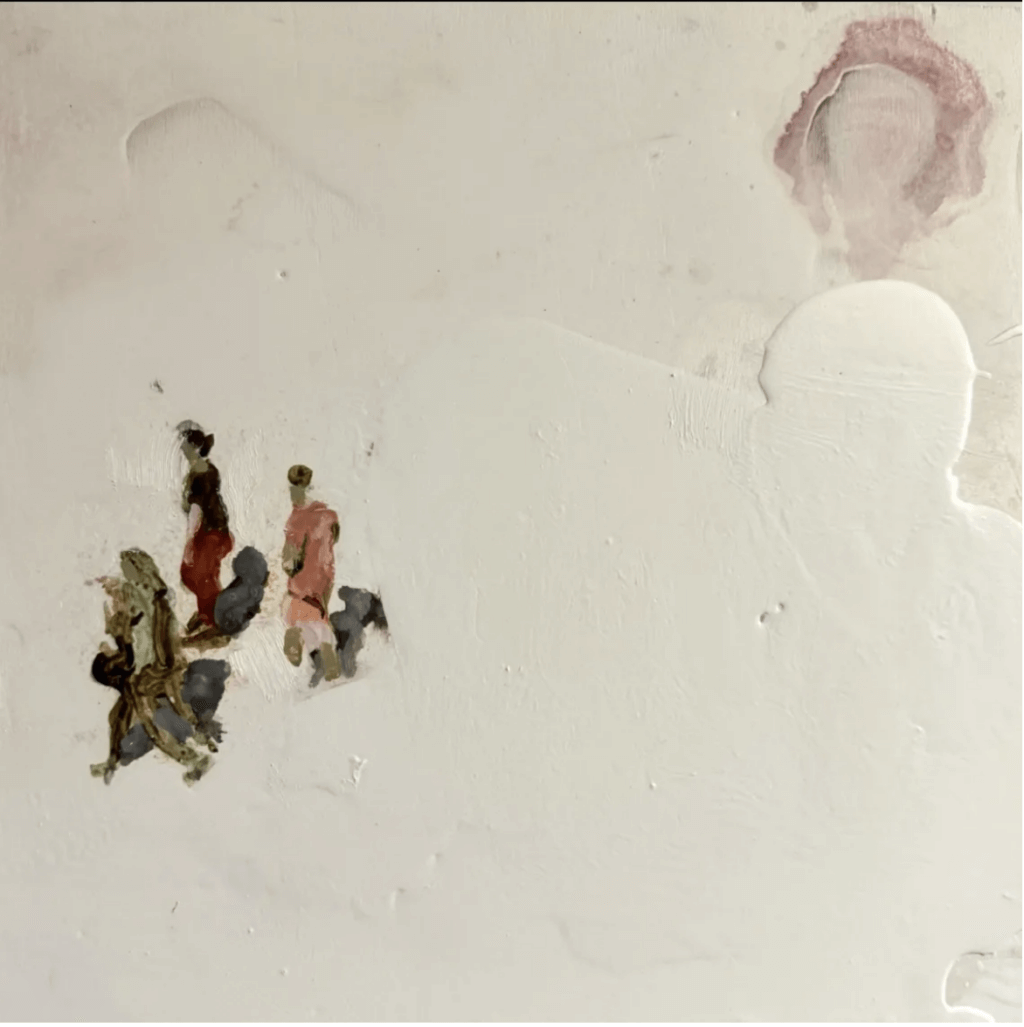
The first grouping, Erasure, gathers together works by Cian McLoughlin, Roxana Manouchehri, Seán Molloy and Brian Harte. In each case, the human figure is undertaking a journey into its own vanishing, piloting a slow process of change, of unbecoming. McLoughlin’s Eigenface is based on machine learning and facial recognition processes that generate an ‘average’ face, which in turn is subtracted from particular instances – producing a diffuse cloud of abstracted features. Manouchehri’s No Kings presents faceless rulers within distressed mirrors, the authority of their role more enduring than their identities. Molloy’s spectral heads dissolve even as they emerge, recalling Beckett’s bon mot, “birth was the death of him.” Harte’s figures likewise threaten to disappear into their shimmering surroundings, as though evaporating in a final climate catastrophe, victims of a planetary heat death.
From a Freudian perspective, these works invite us to ask: what unconscious attachment has been disavowed? That which is absent, which is obscured, draws our attention to the fact that something precious is nevertheless repudiated and tactically withheld from view. For Lévi-Strauss, meanwhile, the question is posed differently: how has an identity become generic, ambivalent, and symbolically indeterminate? Stripped of specificity, the figures in Erasure enter the broadest field of symbolic relations – they are stand-ins for anyone and no-one.
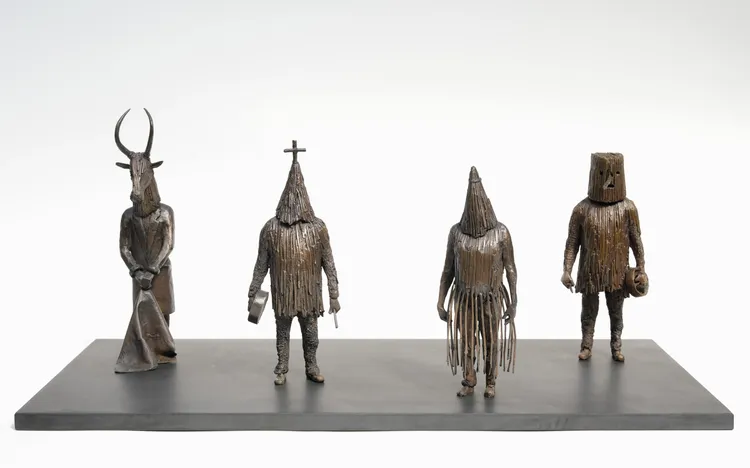
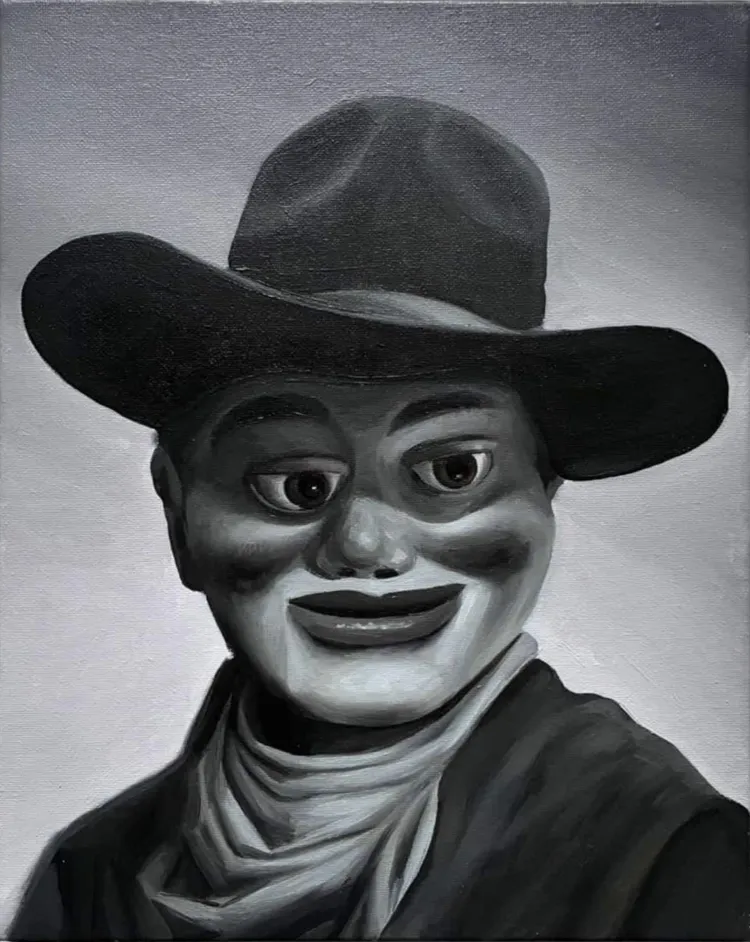
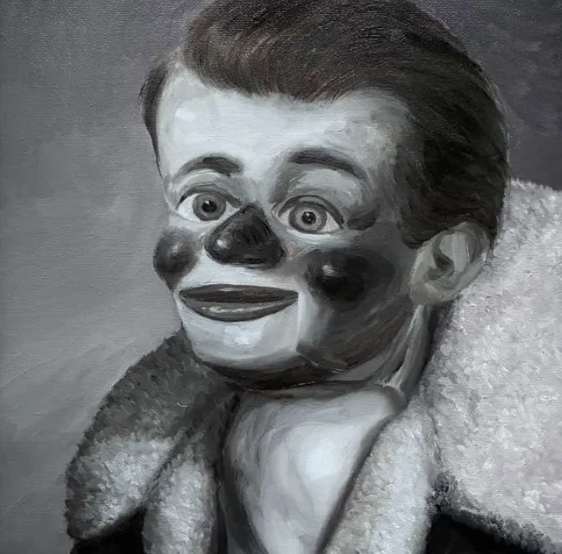
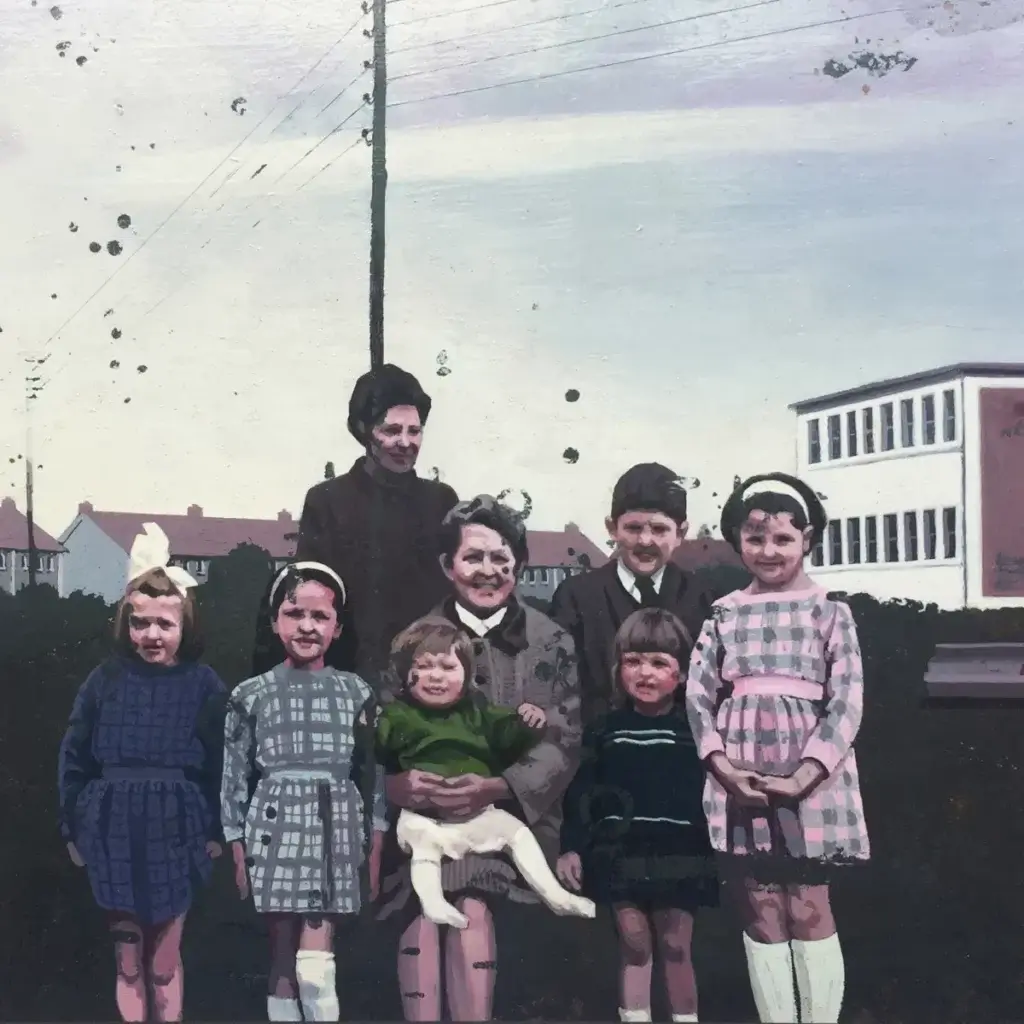
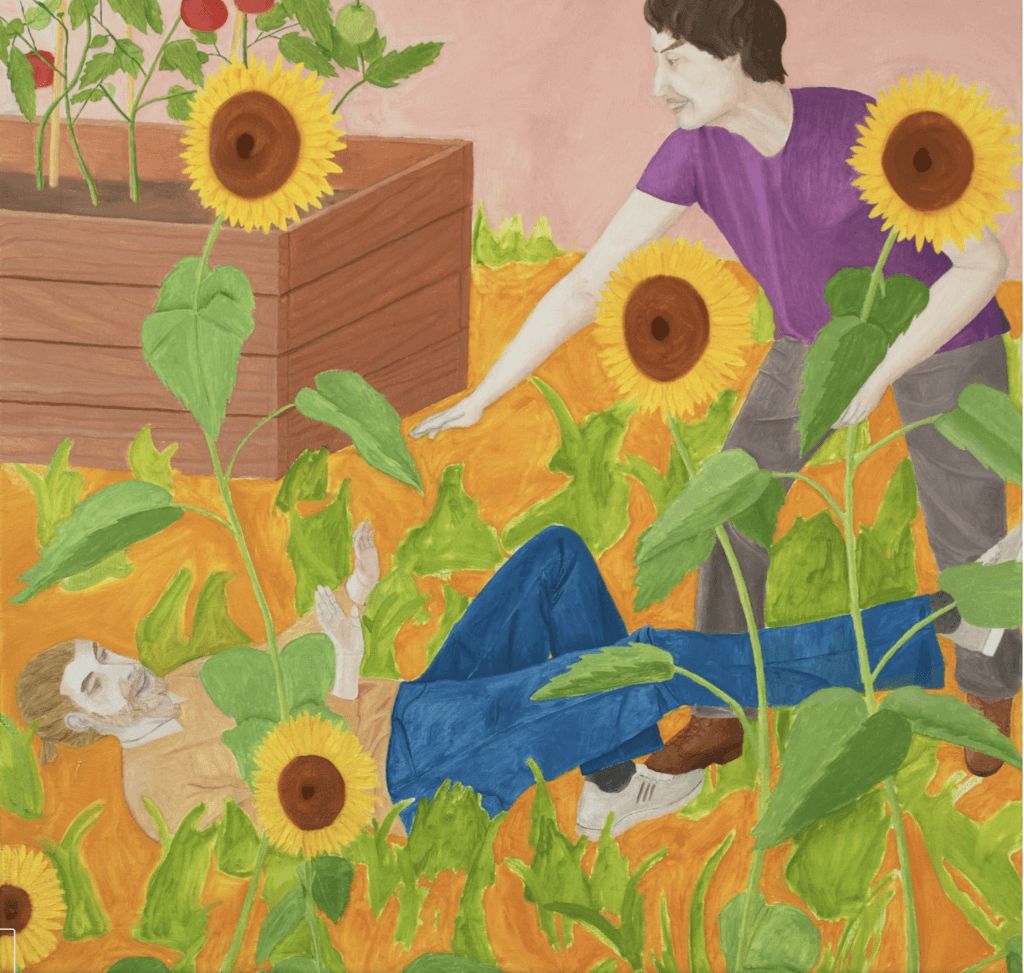
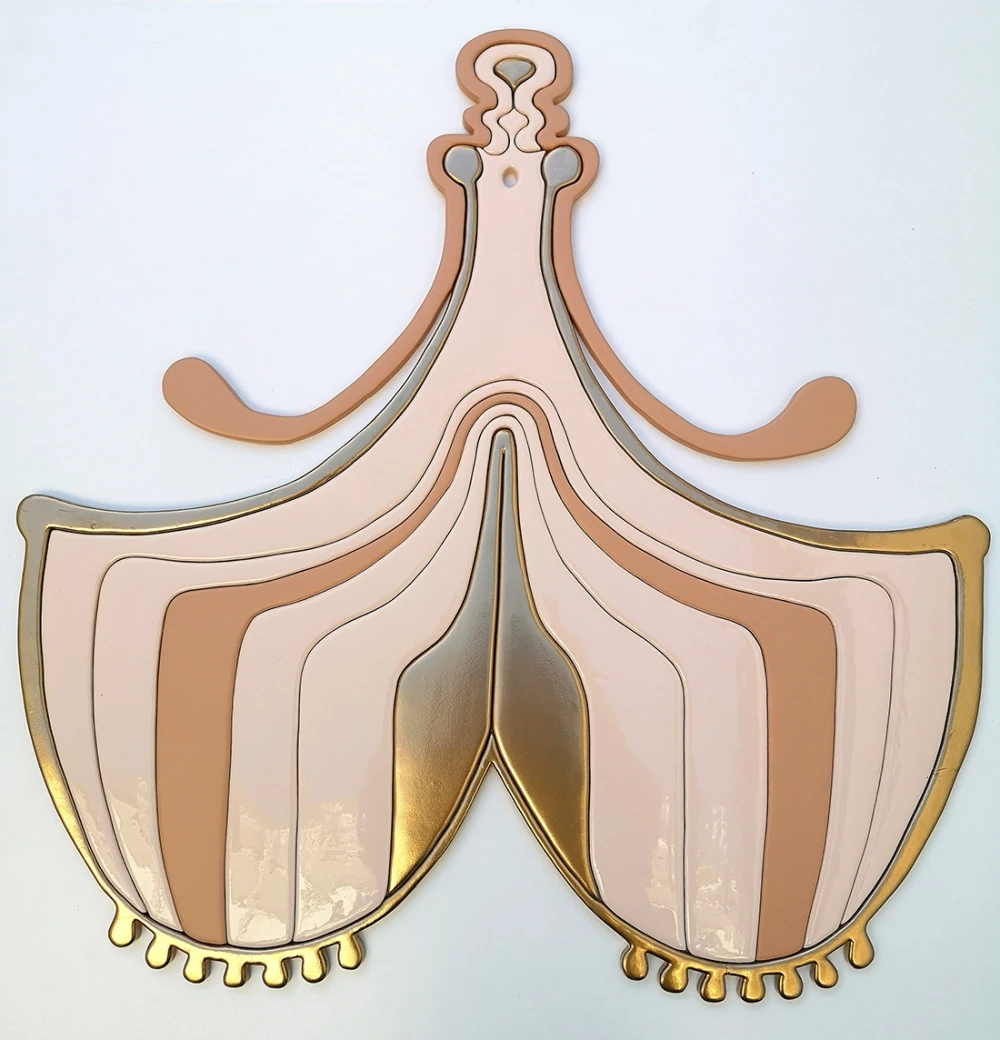
If Erasure involves the effacement of identity, Archetype involves its over-determination. This grouping brings together Patrick Redmond, Tim Shaw, Aideen Barry, Vanessa Jones, Vera Klute and Alan Phelan. Redmond’s Dummy Paintingsreplace individual subjects with ventriloquist dummies and mannequins, occupying an uncanny territory between object and person. Shaw’s bronze mummers portray icons of ritualised performance and folklore. Barry, inspired by the Spanish surrealist painter Remedios Varo, collapses distinctions between human and animal to create a pseudo-mythological being. Drawing upon ancient Roman imagery, Jones recasts a contemporary figure as an archetypal huntress, an Artemis, fusing classical motifs with the visual language of the present. Klute’s portrait of Luke Kelly transforms an individual into a vessel of collective memory, while Phelan’s para-historical images become condensed emblems for wider social and political identities. Throughout this section, the individual gives way to the type, the role, the symbol.
What deep-seated fears and fantasies have accreted within these figures? Archetypes attract strong psychic investments insofar as they are screens for projection: carriers of our collective longing. Alternatively, we might ask, what is their function in the symbolic register? Archetypes provide the sorting principle for classification – they are an exemplary case. Human and animal, self and other, individual and collective: the archetype is a conceptual portal through which such distinctions can be thought.
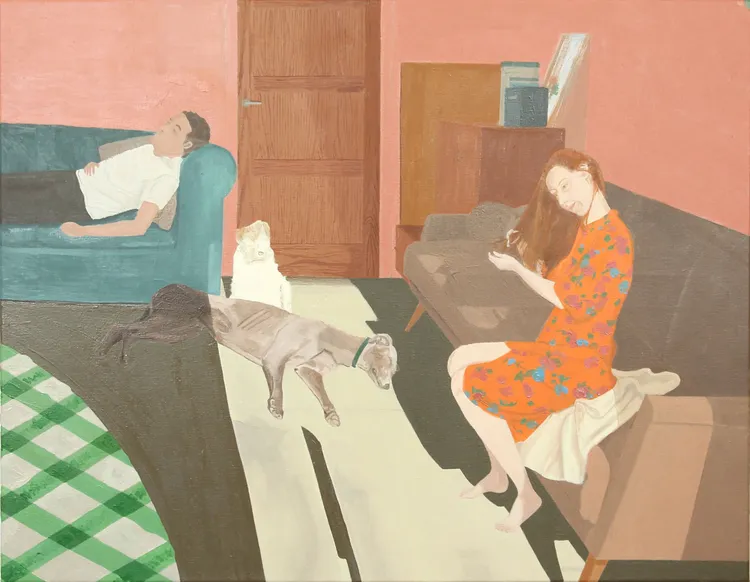
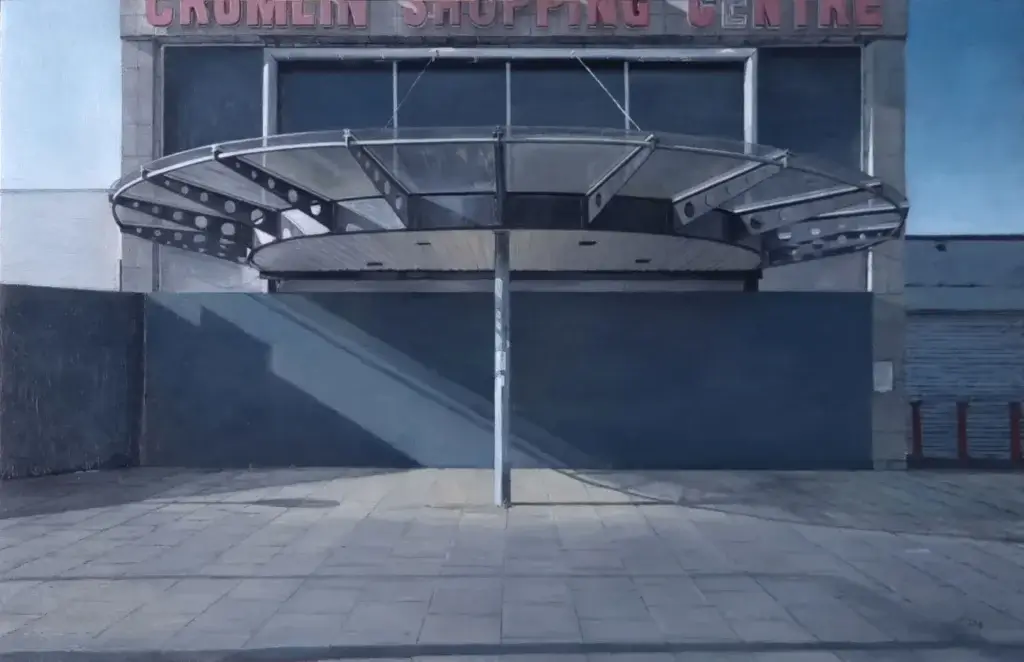
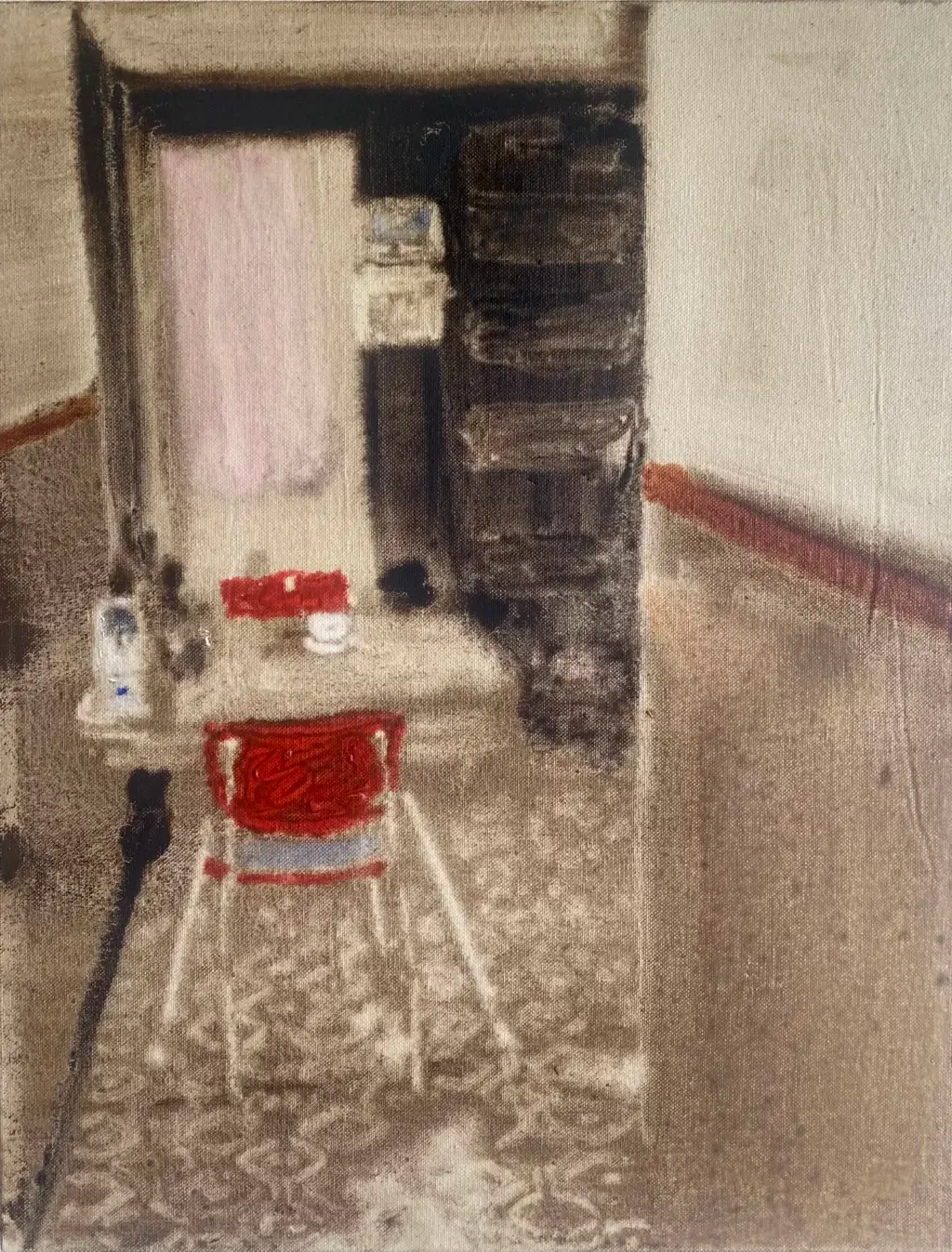
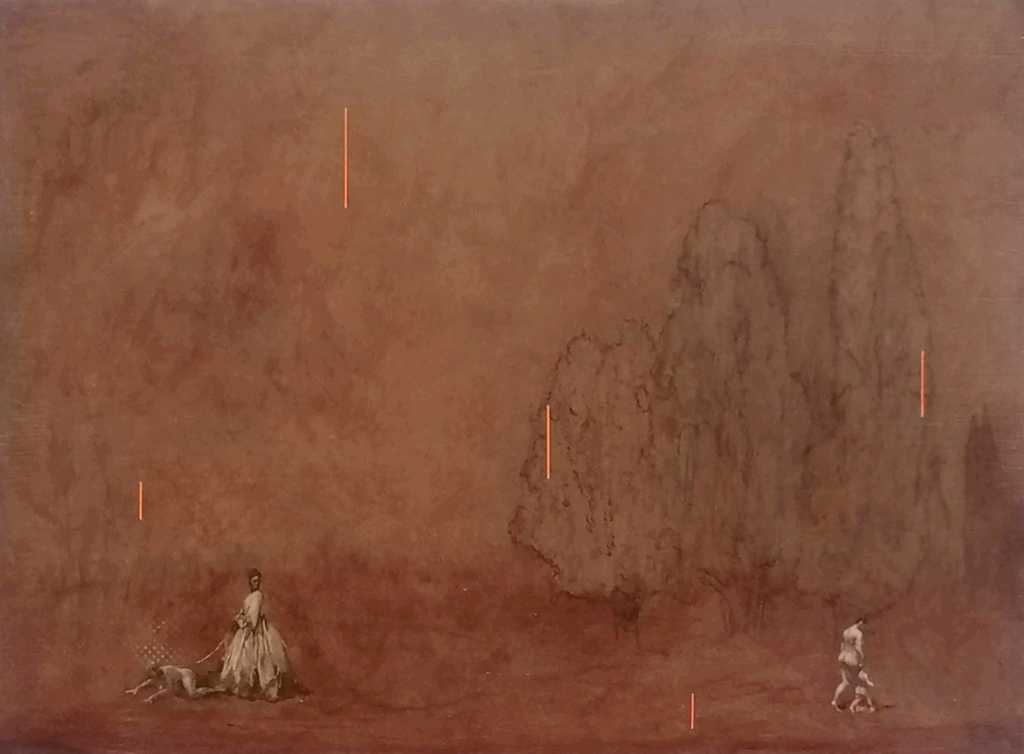
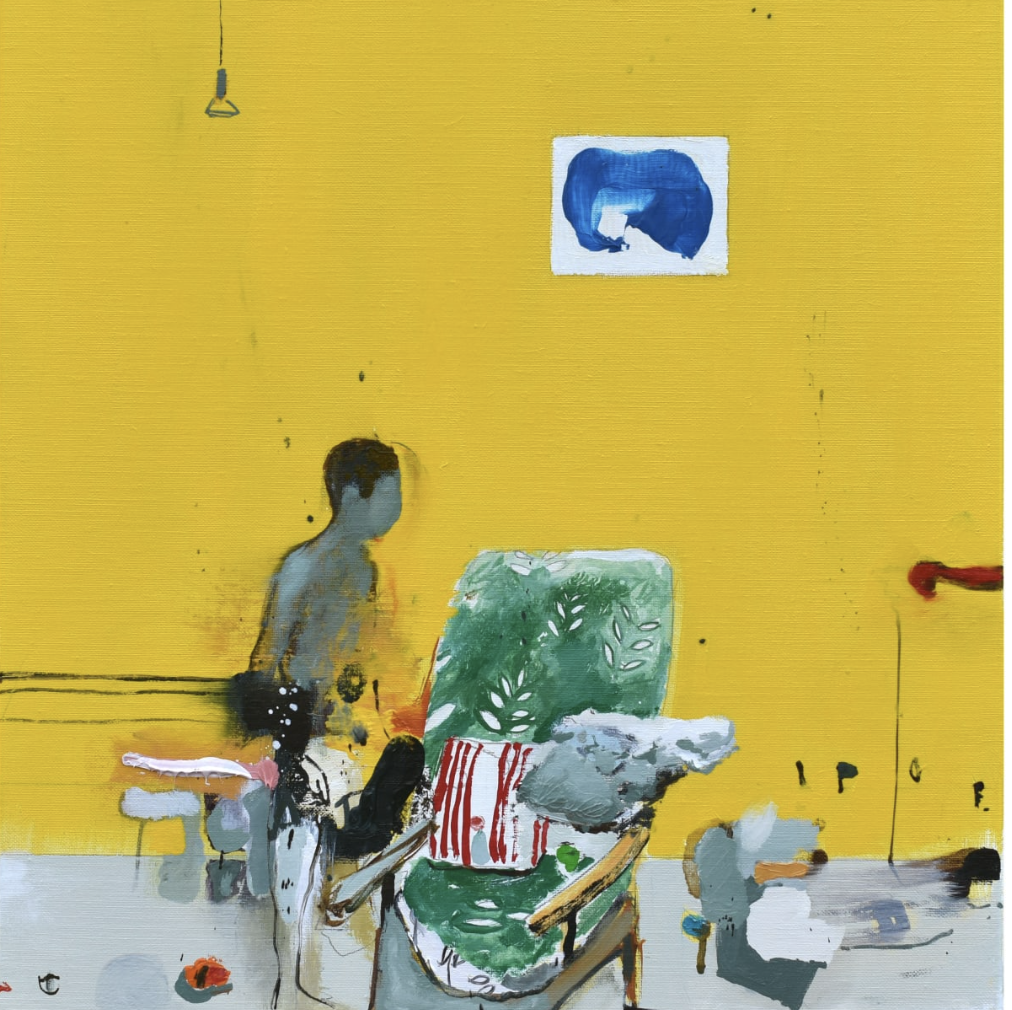
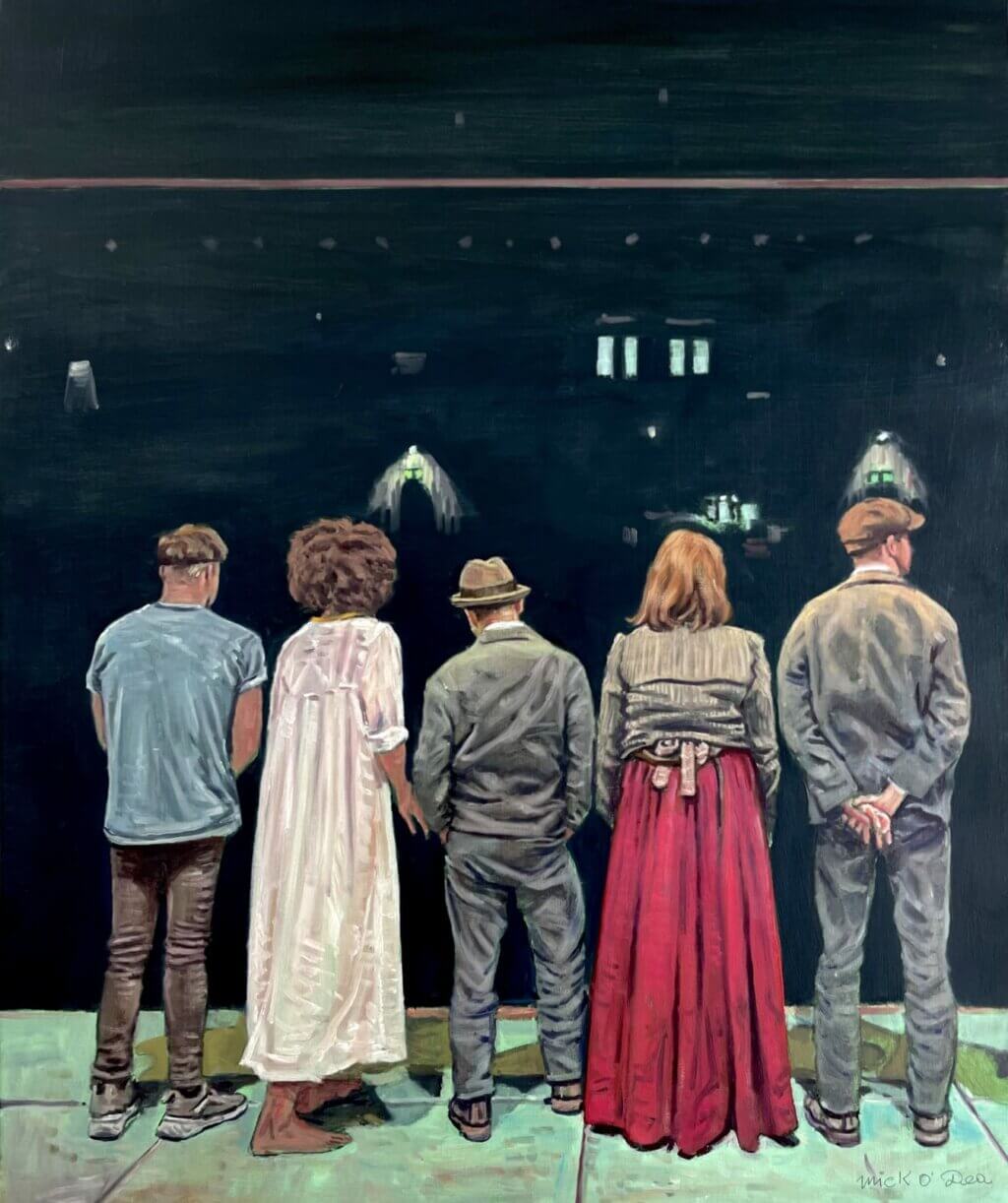
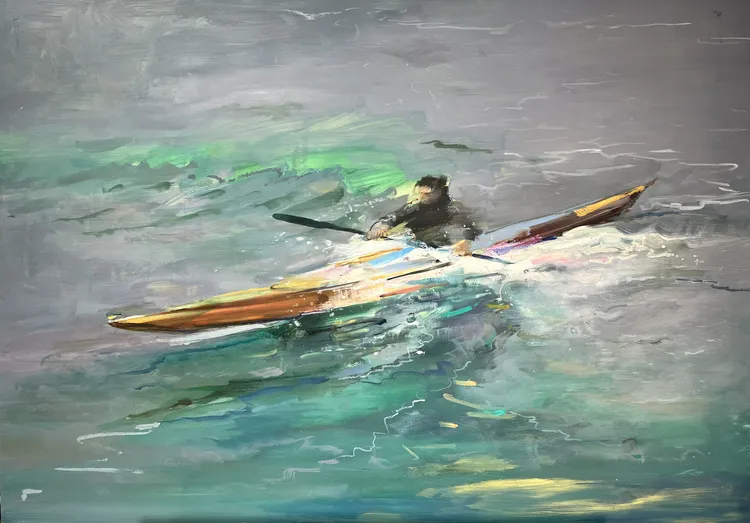
The final grouping, Void, comprises works by Mollie Douthit, Gabhann Dunne, and Oscar Fouz Lopez. Unlike the preceding sections, these works are not organised around figures so much as the distant spaces between them, the empty stretches, the spans of solitude. Douthit’s paintings transform ordinary domestic interiors into scenes of quiet estrangement. Dunne’s solitary voyager is dwarfed by the scale of the wintery ocean. Lopez depicts a contemporary scene of inattentive co-existence. Throughout these artworks, humans are present, but what commands attention are the intervals around them.
What lack do these works speak of, which continues to compel? Perhaps these emptinesses acquire their intensity from something that can no longer be fully possessed or recovered. Alternatively, we might wonder how gaps or vacancies can generate meaning? The space between letters, the distance between mind and sign, the imperfect match between intention and meaning: these are not deficiencies but constitutive elements within a symbolic system.
Freud and Lévi-Strauss may offer competing explanations for how the subject is mediated, but both ultimately project their preferred causal force into the totem, treating it as a site where those foundational forces are condensed and made legible.
The artists in this exhibition return to that same terrain: bringing our attention to the totem’s semantic density, its saturation with and by meaning.
Across a range of styles – sometimes in low whispers, sometimes by loud proclamation – these artists trace the totem’s irreducible otherness.